What to Ask Your Perfume Pump Supplier Before Placing a Bulk Order
- Share
- publisher
- UnionSprayer
- Issue Time
- Aug 7,2026
Summary
Placing a bulk perfume pump order? Ask your supplier these 10 questions first — covering bottle compatibility, MOQ, QC testing, lead time, customization, and defect policy to avoid costly mistakes.
Quick Answer
Before placing a bulk order, ask your perfume pump supplier about product compatibility, MOQ, lead time, quality control procedures, customization options, payment terms, and after-sales support. Clear answers to these questions help reduce production risks, avoid unexpected costs, and ensure your perfume packaging meets your brand's quality standards.
Choosing the right perfume pump is only part of a successful fragrance packaging project. Equally important is choosing the right supplier. Many buyers compare suppliers based primarily on price — but production delays, compatibility issues, inconsistent quality, and poor communication often become much bigger problems than a small price difference.
Whether you're sourcing standard perfume pumps or developing custom fragrance packaging, asking the right questions before placing a bulk order can help you reduce risks, avoid costly mistakes, and build a long-term partnership with a reliable supplier. This guide outlines the ten most important questions every fragrance brand, packaging buyer, and product developer should ask before confirming an order.
Is the Pump Compatible with My Bottle?
This should always be your first question.
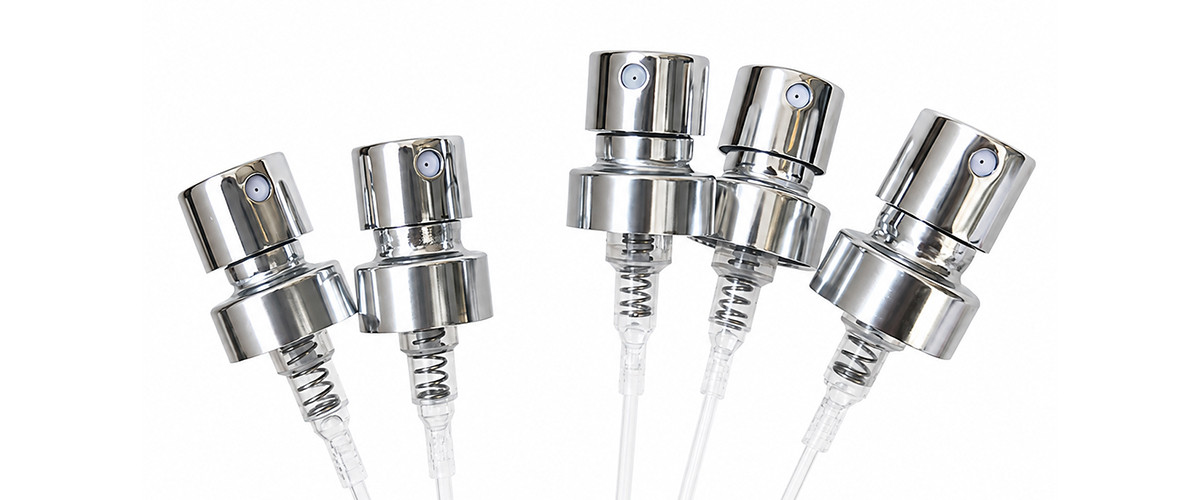
Even if the bottle and pump share the same neck specification (such as 18/415 or 20/410), compatibility is not guaranteed. Small manufacturing tolerances, bottle designs, and sealing components can affect the final fit. Glass bottle neck dimensions can vary slightly between suppliers and production batches due to differences in molding processes and mold maintenance.
Ask your supplier:
- Has this pump been tested with bottles similar to mine?
- Can you verify compatibility before production?
- Should I send bottle samples for assembly testing?
If your bottles and pumps come from different suppliers, compatibility testing becomes even more important.
What Is the Minimum Order Quantity (MOQ)?
MOQ directly impacts your purchasing budget and inventory planning. Different product types often require different minimum quantities. MOQ varies by supplier, but typical ranges experienced buyers encounter include:
| Product Type | Typical MOQ |
|---|---|
| Standard stock perfume pumps | 10,000 pcs |
| Custom-colored pumps | 10,000–30,000 pcs |
| New custom components / new molds | 30,000+ pcs |
Instead of simply asking for the MOQ, also ask:
- Is the MOQ per color or total quantity?
- Can multiple colors be combined?
- Do you offer stock components that can reduce tooling costs?
- What's the price difference between quantity tiers (e.g., 10K vs. 50K vs. 100K)?
Understanding these details may significantly reduce your purchasing costs.
What Quality Control Procedures Do You Follow?
Receiving one good sample does not guarantee consistent production quality. Ask your supplier about their complete quality control process.
Common QC tests for perfume pumps include:
| Test | Common Methods | What to Confirm |
|---|---|---|
| Leakage | Vacuum testing, inversion test, or pressure test | Which method they use and what pass criteria they apply |
| Spray output | Random sample measurement (e.g., 50 units) | What tolerance range they control to |
| Spring fatigue | Consecutive press cycling | How many cycles they test and what "pass" means |
| Torque | Removal torque gauge | What range they consider acceptable |
| Visual | Manual or automated inspection | What defects they screen for (flash, burrs, misalignment) |
Also ask:
- Do you inspect incoming raw materials?
- What AQL inspection level do you use? (Many packaging suppliers use AQL 1.5 or 2.5 depending on customer quality requirements.)
- Can you provide a pre-shipment inspection report with test results and photos?
- How are defective products handled during and after production?
A professional supplier should clearly explain each inspection stage instead of simply saying that "all products are inspected." If a supplier claims "zero defects," it's worth asking how they measure — even the best-run production lines have measurable variation.
What Is the Expected Lead Time?
Lead time involves much more than manufacturing. A typical perfume packaging project includes several stages, and timelines vary by supplier, complexity, and season:
| Stage | Typical Duration |
|---|---|
| Sample preparation | 7–15 days |
| Sample approval | 3–7 days |
| Mass production | 30–45 days (stock); 45–75 days (custom/new mold) |
| Quality inspection | 3–5 days |
| Shipping | Around 30 days by ocean freight (varies by destination) |
Ask your supplier:
- How long will sampling take?
- What is the production lead time for my specific product type?
- Does lead time change during peak seasons (e.g., pre-holiday, pre-summer launch)?
- What factors could delay delivery, and how will you communicate them?
- If the delivery date is missed, what compensation or adjustment do you offer?
Planning ahead helps avoid delays during product launches. A supplier who shares production progress photos at key milestones is typically one with transparent processes.
Can You Support Customization?
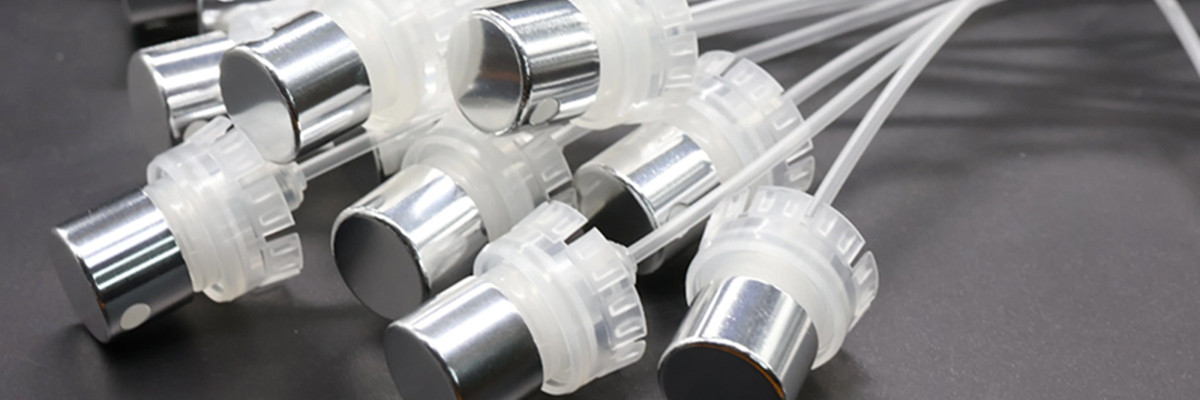
Even if you're not creating a completely custom perfume pump, customization can improve your brand identity. Ask what customization services are available, such as:
- Aluminum collar colors (matte, glossy, metallic finishes)
- Logo printing or laser engraving
- Custom dip tube length (adjusted to your bottle height and internal structure)
- Different spray outputs (dosage per stroke)
- Surface treatments (UV coating, electroplating, spraying)
- Retail packaging options
Using existing components with customized finishes is often more economical than developing completely new tooling. If your project requires custom colors, ask whether the supplier can match Pantone colors or provide color samples before production.
For the internal components — gasket, spring, and ball — it's also worth confirming materials. For example, gasket options commonly include LDPE, EVA, and Silicone, and the appropriate choice depends on your formula's alcohol content and chemical characteristics. For fragrances with aggressive or citrus-heavy ingredients, 316 stainless steel springs may offer better corrosion resistance than the more common 304 grade.
What Payment Terms Do You Offer?
Payment terms vary depending on the supplier, order value, and whether products are standard or customized. A common arrangement is a deposit (often around 30%) with the balance due before shipment.
Before placing an order, confirm:
- Is a deposit required, and what percentage?
- When is the balance due — before shipment or against bill of lading?
- Which payment methods are accepted?
- Can sample costs be deducted from future bulk orders?
- When does production start — on deposit receipt or PO date?
For sample orders or small-quantity stock purchases, 100% payment in advance is also common. The key is aligning payment structure with the order type and relationship stage. Clear payment terms help avoid misunderstandings and simplify budgeting.
Remember that reliable communication and consistent quality are usually more valuable than slightly more flexible payment terms.
Can You Share Similar Projects or Industry Experience?
Experience in fragrance packaging matters. Suppliers familiar with perfume packaging usually understand bottle and pump compatibility, decorative finishes, assembly requirements, packaging quality standards, and international shipping requirements.
Ask questions such as:
- Have you supplied perfume pumps for similar brands or product categories?
- Do you work with startup fragrance brands as well as established ones?
- Can you share product photos or project references (with appropriate confidentiality)?
- What markets do you typically export to?
Past experience often leads to smoother communication and fewer production issues.
How Do You Handle Quality Issues After Delivery?
Even with strict quality control, unexpected issues may occasionally occur. Defect claim thresholds should be agreed before production, as requirements vary significantly between brands — some accept a small tolerance, while others (particularly premium brands) may have stricter policies.
Before confirming your order, ask:
- What defect threshold triggers a claim?
- How should quality issues be reported, and what information is required for investigation?
- Will replacement products, credit notes, or refunds be provided if the issue is confirmed?
- Who covers shipping costs for replacements?
- What is the claim window after delivery?
- Do you hold safety stock for reorders to speed up replacements?
A reliable supplier should have a clearly defined after-sales process and be willing to put these terms in writing.
What Certifications or Compliance Documents Can You Provide?
Depending on your market, supporting documentation may be required. Ask whether the supplier can provide:
- Material specifications (including gasket, spring, and ball materials)
- Product testing reports
- REACH or RoHS compliance (if applicable to your market)
- MSDS / SDS for relevant materials
- Material safety certificates for food-grade or cosmetic-grade applications
Not every project requires every document, but professional suppliers should clearly explain what they can provide and what they cannot.
Who Will Be My Main Contact During the Project?
Consistent communication is essential throughout production. Before placing your order, confirm:
- Who will manage the project day to day?
- Who answers technical questions about materials, compatibility, and customization?
- Who follows production progress and provides updates?
- How quickly should you expect responses to emails or messages?
- What languages does the team support for communication?
Having one dedicated contact person improves communication efficiency and reduces misunderstandings. Communication quality during the quotation phase often reflects communication quality throughout the entire project.
5 Red Flags When Choosing a Perfume Pump Supplier
Not every supplier is the right long-term partner. Watch for these warning signs before placing a bulk order.
1. Pricing That Is Significantly Lower Than Everyone Else
Extremely low quotations may indicate lower-quality materials, inconsistent production, or hidden costs. Always compare the complete quotation — including mold fees, color matching, QC documentation, and freight — rather than focusing only on unit price.
2. Vague Answers to Technical Questions
If a supplier cannot clearly explain compatibility, quality control methods, or production processes, they may lack experience in fragrance packaging. Professional suppliers should answer technical questions confidently and transparently.
3. Unclear Lead Times
Statements like "probably next month" or "production should be fast" are not sufficient. Reliable suppliers provide realistic production schedules and proactively communicate potential delays.
4. No Sample Evaluation Before Mass Production
Skipping sample approval significantly increases the risk of compatibility, appearance, or performance problems. Always approve production samples before mass production begins.
5. Slow or Inconsistent Communication
Communication quality during quotation often reflects communication quality throughout the project. Delayed or incomplete responses are warning signs that should not be ignored.
Bulk Order Checklist
Before confirming your purchase order, make sure every item below has been verified.
| Checklist Item | ✓ |
|---|---|
| Pump-bottle compatibility confirmed with actual samples | ☐ |
| MOQ meets your project requirements (per color clarified) | ☐ |
| Samples tested and approved (including spray performance) | ☐ |
| Production lead time confirmed for your product type | ☐ |
| QC test methods and AQL level confirmed | ☐ |
| Payment terms agreed (deposit, balance, methods) | ☐ |
| Customization details finalized (colors, finishes, logo) | ☐ |
| After-sales and defect policy agreed in writing | ☐ |
| Compliance documents requested if needed | ☐ |
| Dedicated contact person confirmed | ☐ |
Spending a little more time confirming these details can prevent expensive problems later.
FAQ
How many perfume pump samples should I test before placing a bulk order?
Whenever possible, test multiple samples assembled with your actual perfume bottle. This helps verify compatibility, spray performance, and overall appearance before production begins.
Can different perfume pump colors be combined to meet the MOQ?
This depends on the supplier's production policy. Some manufacturers allow color combinations using standard components, while others require the MOQ for each individual color.
Should I always choose the lowest quotation?
No. Product quality, communication, production capacity, lead time, and after-sales service should all be considered alongside pricing. A unit price that looks significantly cheaper may exclude mold fees, color matching, or QC documentation.
Can one perfume pump fit every perfume bottle?
No. Compatibility depends on neck finish, dimensions, and overall packaging design. Even pumps and bottles with the same nominal spec (e.g., 18/415) can have slight dimensional variations. Testing the complete bottle-and-pump assembly before mass production is always recommended.
What information should I prepare before contacting a perfume pump supplier?
Prepare your bottle drawing or sample, neck finish specification, desired colors, estimated order quantity, target market, and project timeline. The more information you provide, the more accurate the supplier's recommendations and quotation will be.
Looking for a perfume pump supplier who answers these before you ask?
Get samples, spec sheets, and a pre-order consultation tailored to your bottle and formula. Request Samples